You've found the perfect lot in Pensacola, Gulf Breeze, or Gulf Shores. The view is spectacular, the neighborhood is ideal, and you're ready to break ground. But before you finalize your floor plans, there's a critical step that can make or break your project: understanding zoning regulations.
Zoning laws dictate everything from how close you can build to your property line to how tall your home can be. Violating these rules can result in costly delays, mandatory redesigns, or even legal action. At Delta Max General Contractor, we navigate these regulations daily across Florida and Alabama. This guide explains zoning basics in plain English, so you can approach your build with confidence.
What Is Zoning and Why Does It Matter?
Zoning is the division of land into districts (or "zones") that regulate how property can be used. Local governments—counties and municipalities—create zoning codes to ensure compatible land uses, protect property values, and manage community growth.
On the Gulf Coast, zoning affects:
- What type of structure you can build (single-family, duplex, commercial)
- Where on your lot you can build (setbacks)
- How large your home can be (lot coverage and floor area ratio)
- How tall your building can be (height restrictions)
- Whether you need additional permits for docks, pools, or detached structures
Common Zoning Designations on the Gulf Coast
- R-1 (Single-Family Residential): Most common in established neighborhoods like those in Pensacola and Gulf Breeze. Restricts buildings to single-family detached homes.
- R-2 (Low-Density Residential): Allows duplexes and some accessory dwelling units. Common in Navarre and Destin.
- R-3 (Multi-Family): Permits apartments and townhomes. Found in denser areas near beaches.
- C-1/C-2 (Commercial): Business districts. If you're considering mixed-use (live-work), check these carefully.
- Conservation/RE (Residential Estate): Large lot requirements (1+ acres), common in Pace and Milton.
Understanding Setbacks: Your Buildable Area
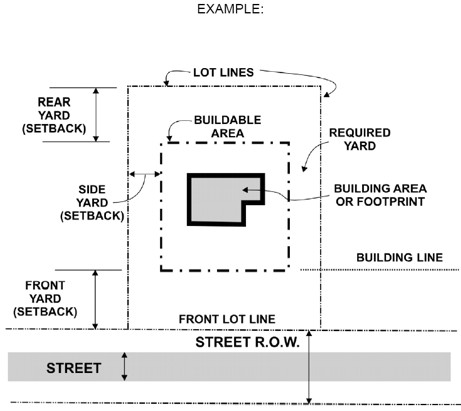
Setbacks are the minimum distances your building must be from property lines. They create the "buildable area" on your lot—the space where you're actually allowed to construct. Standard setbacks on the Gulf Coast typically include:
Front Yard Setback
Usually 20-35 feet from the street right-of-way. In beach communities like Perdido Key or Gulf Shores, this may be measured from the dunes or coastal construction control line rather than the road.
Side Yard Setbacks
Typically 7.5-10 feet per side. Corner lots often have different requirements for the "street side" versus the interior side. On narrow lots common in historic Pensacola neighborhoods, side setbacks may be reduced to 5 feet with special variances.
Rear Yard Setback
Usually 20-25 feet from the rear property line. This ensures privacy between neighbors and space for drainage and utilities.
Pro Tip: Always verify setbacks with a current survey. At Delta Max GC, we order boundary surveys before finalizing any custom home design to ensure compliance and avoid surprises.
Lot Coverage and Floor Area Ratio (FAR)
Beyond setbacks, zoning codes limit how much of your lot can be covered by buildings and impervious surfaces.
Lot Coverage: The percentage of your lot that can be covered by the house footprint, garage, and permanent structures. In most Gulf Coast residential zones, this ranges from 30-50%. This leaves room for drainage, landscaping, and permeable surfaces—critical for managing the heavy rains common to our region.
Floor Area Ratio (FAR): The ratio of total building square footage to lot size. For example, if your lot is 10,000 sq ft and the FAR is 0.4, your total building size (including two stories) cannot exceed 4,000 sq ft. This prevents overcrowding and maintains neighborhood character.
Height Restrictions and View Corridors
Gulf Coast communities strictly regulate building heights, particularly in beachfront areas. Height limits serve two purposes: preserving views for the community and ensuring buildings can withstand hurricane-force winds.
- Inland Residential: Typically 35-45 feet (2.5 stories)
- Beachfront Zones: Often limited to 30-35 feet to preserve coastal views
- Historic Districts: Strict limits to maintain architectural character, common in downtown Pensacola
Height is usually measured from grade (ground level) to the midpoint of the roof. For homes on pilings—common in flood zones—measurement typically starts at the first elevated floor, but this varies by jurisdiction.
HOA Covenants vs. Zoning Laws
Many Gulf Coast communities, particularly planned developments in Gulf Breeze, Daphne, and Fairhope, have Homeowners Associations (HOAs) with additional restrictions. HOA covenants can be stricter than zoning codes but cannot violate them.
Common HOA requirements include:
- Architectural style guidelines (coastal cottage, Mediterranean, etc.)
- Minimum square footage requirements
- Exterior material restrictions (no vinyl siding, specific roofing materials)
- Landscape and fencing specifications
- Construction timeline limits
Before purchasing a lot, request the HOA Declaration of Covenants, Conditions, and Restrictions (CC&Rs). At Delta Max GC, we review these documents during our initial site evaluation to ensure your dream home complies with both zoning and neighborhood standards.
How to Check Your Zoning
Never assume you know a property's zoning based on neighboring homes. Zoning can change street-by-street, especially near commercial corridors or waterfronts.
Step 1: Visit your county's Geographic Information System (GIS) website. Both Escambia County (Florida) and Baldwin County (Alabama) offer interactive maps showing zoning, flood zones, and property boundaries.
Step 2: Contact the local planning department. In Pensacola, this is the Planning Division of the Development Services Department. In Gulf Shores, contact the Building Department directly.
Step 3: Request a Zoning Verification Letter for official confirmation, especially if you're in an unincorporated area where city and county jurisdictions overlap.
When Zoning Gets Complicated: Variances and Special Exceptions
Sometimes your dream design doesn't fit within standard zoning. You might want a smaller side setback to accommodate a specific floor plan, or additional height for a third-story observation deck. In these cases, you may need a variance—official permission to deviate from zoning requirements.
The variance process typically involves:
- Pre-application conference with planning staff
- Formal application with site plans and justification
- Public notice to neighboring properties
- Hearing before the Board of Adjustment
- Potential appeal process if denied
Success requires proving "hardship"—that your lot has unique characteristics making strict compliance impractical. The process takes 60-90 days and involves fees, but experienced builders like Delta Max GC can navigate this efficiently.
Gulf Coast Specifics: Florida vs. Alabama
While both states follow similar zoning principles, local amendments create important differences:
Florida (Escambia & Santa Rosa Counties):
- Coastal Construction Control Line (CCCL) permits required for beachfront building
- Florida Building Code Chapter 11 mandates specific setbacks from mean high water line
- Concurrency requirements—you must prove roads, schools, and utilities can handle new development
Alabama (Baldwin & Mobile Counties):
- Alabama Coastal Area Management Program (ACAMP) regulates beachfront construction
- Generally more permissive lot coverage ratios than Florida
- Some unincorporated areas have minimal zoning—always verify before building
Don't Navigate Zoning Alone
Zoning research is part of every Delta Max GC project. From preliminary site analysis to permit approval, we handle the regulatory complexity so you can focus on designing your perfect home.
Schedule a Site EvaluationFrequently Asked Questions
Can I build closer to the property line if my neighbor agrees?
No. Zoning setbacks are legal requirements that cannot be waived by agreement between neighbors. Only a formal variance from the Board of Adjustment can modify setbacks.
Does a detached garage count toward lot coverage?
Yes, all permanent structures typically count. In some jurisdictions, open carports may have different calculations. Always verify with your local planning department.
What happens if I build without checking zoning?
You could face stop-work orders, fines, mandatory demolition of non-compliant structures, and difficulty obtaining a Certificate of Occupancy. Always verify zoning before closing on land.
Are there zoning exceptions for affordable housing?
Some jurisdictions offer density bonuses or reduced setbacks for workforce housing. Check with the City of Pensacola Housing Department or Mobile Planning Department for current incentives.
How do setbacks work for corner lots?
Corner lots typically have two front yards (facing both streets) and modified side yard requirements. This often reduces your buildable area compared to interior lots—factor this into your budget and design.